loading modules: economy_design, monetization, activation, product_management ... OK
mounting /dev/portfolio on ... OK
Heya! o/
My name is Kamil. I’m from Poland, currently living in Kraków. I spent 10 years developing mobile games - strategy, tycoon, casual.
I’m looking for a role such as Senior Product Owner/Product Manager in a mobile digital space - apps and games are my wheelhouse. Remotely or hybrid in Kraków, and I’m available ASAP.
I blend typical PM knowledge and experience with a mix of creating F2P economies, features, and monetization. These can be used in the digital app space to drive free → paid conversion, improve retention, pricing and paywall design or to create more engaging mobile games.
Tech stack
- Analytics — Firebase, BigQuery, Looker, Amplitude, Python.
- Product — Jira, Confluence, ClickUp, Asana; Kanban and Scrum.
- Stores — App Store Connect, Google Play Console: releases, Google/Apple communications, staged rollouts, IAP and subscription setup, regional pricing, ASO adjustments/tests, review analysis.
- Ad monetization — AppLovin MAX, Unity Ads, AdMob: initial configuration, placement design, eCPM and fill monitoring.
- Attribution — AppsFlyer: initial configuration, implementation test, reports & campaign analysis.
- Design — Figma, Miro, Excalidraw, articy:draft.
- Engine — Unity.
- Research — PlaytestCloud, Discord, SurveyMonkey.
- AI — Claude Code.
You can check out the products that I’ve made as a Product Manager / Product Owner below:
 Landlord — a multiplayer, location-based tycoon.
 Sequence World — board game adaptation of Goliath IP.
 Joking Hazard — board game adaptation of Cyanide & Happiness IP.
 Get Rent — Landlord’s successor.
Solo Projects
 Ambient Sudoku — a chill & relax sudoku project built with a friend.
 The Alchemist — a narrative driven game written in ink and deployed via capacitor. Solo built and written.
You can also check out some of the case studies I’ve written:
- Keeping a finite world playable — how a finite supply of properties throttles the growth and what we did with that
- Finding the leak — diagnosing and fixing the first-time user experience
How I work
I always start with numbers. What works and what doesn’t is often hidden behind a large amount of data that no one actually looks at, as in the Sequence - Finding the leak - where I discovered that the first_open event was lying to us and created a false perspective that FTUE worked correctly.
I also think like a game & economy designer by analyzing core systems, mechanics, and features. As you can see in Keeping a finite world playable - where I had to create systems that targeted new players and allowed them to play effectively from day 1.
Decision-making process
I decide based on cohorts and measurements before/after - and I can tell what this doesn’t prove and the limitations of this method.
This is obviously not a perfect approach, but given the specifics of companies that I worked in and limited resources that was the way to go.
I don’t hide from responsibilities. When we lack enough data to make an informed decision, I am able to make a judgment call.
Living the dream, up to a point
I created multiple games, and on some of them I failed to deliver good enough KPIs to keep them alive. So I had to kill projects and moved the team to other initiatives with a soft landing.
One of the games I had to kill was really dear to me, as it was my first project created entirely in Unity - Food Truck Tycoon.
Me, myself and AI
I use LLMs every day - mostly for coding. I don’t use it to create features or economies, just tools that help me make them better. I found out that designing features with LLMs actually slows me down and creates tunnel vision that might hurt the product in the long run. I’m not an engineer, and I’m not pretending to be, but I can get quite far with prototyping systems or query analytics without including other team members. I always start with a spec.md.
Even creating this site, I had issues with Mermaid in Quartz; going step by step, I’ve verified that Mermaid was crashing on a global theme initialization. So it would have required diving into Quartz global theme adjustments and I’ve decided to go to mermaid.live and create it myself and use a .png in one of the case studies.
You can check some of the tools I’ve created with Claude Code in tools section.
Player data
I started in the industry as a Community Manager years ago, so players and their behaviour are always close to me. I try to gather feedback, issues, and requests to get to know the current “atmosphere” in the community. I always include that in my work to add to business value. I ran playtests on different sites and created communities of up to 25k members on Discord from scratch.
Team player
I often wear multiple hats, and I like to get my hands dirty instead of just managing and checking the outcome. I ran teams that included developers (frontend/backend), designers, testers, and analysts. Teams of up to 15 people working in Kanban. Scrum by the book would be a bit of overkill for this team size.
Outside work
Apart from typical sports, books & video games, there are actually plenty of things happening.
Unlucky Tribe
I co-founded a small indie company with a couple of friends of mine. We’re currently working on a narrative-heavy, cosmic horror RPG with a narration approach similar to Disco Elysium.
We even have our own website!
Dungeons & Dragons
Since COVID, I have been an avid player of D&D. I’ve already put in hundreds of hours and am still counting. A year ago, I went out of my comfort zone and asked few strangers from Discord to play D&D with me being the DM. We’re still playing to this day, and every week or so I need to read a table of six people in real time.
Bonus: A cat!
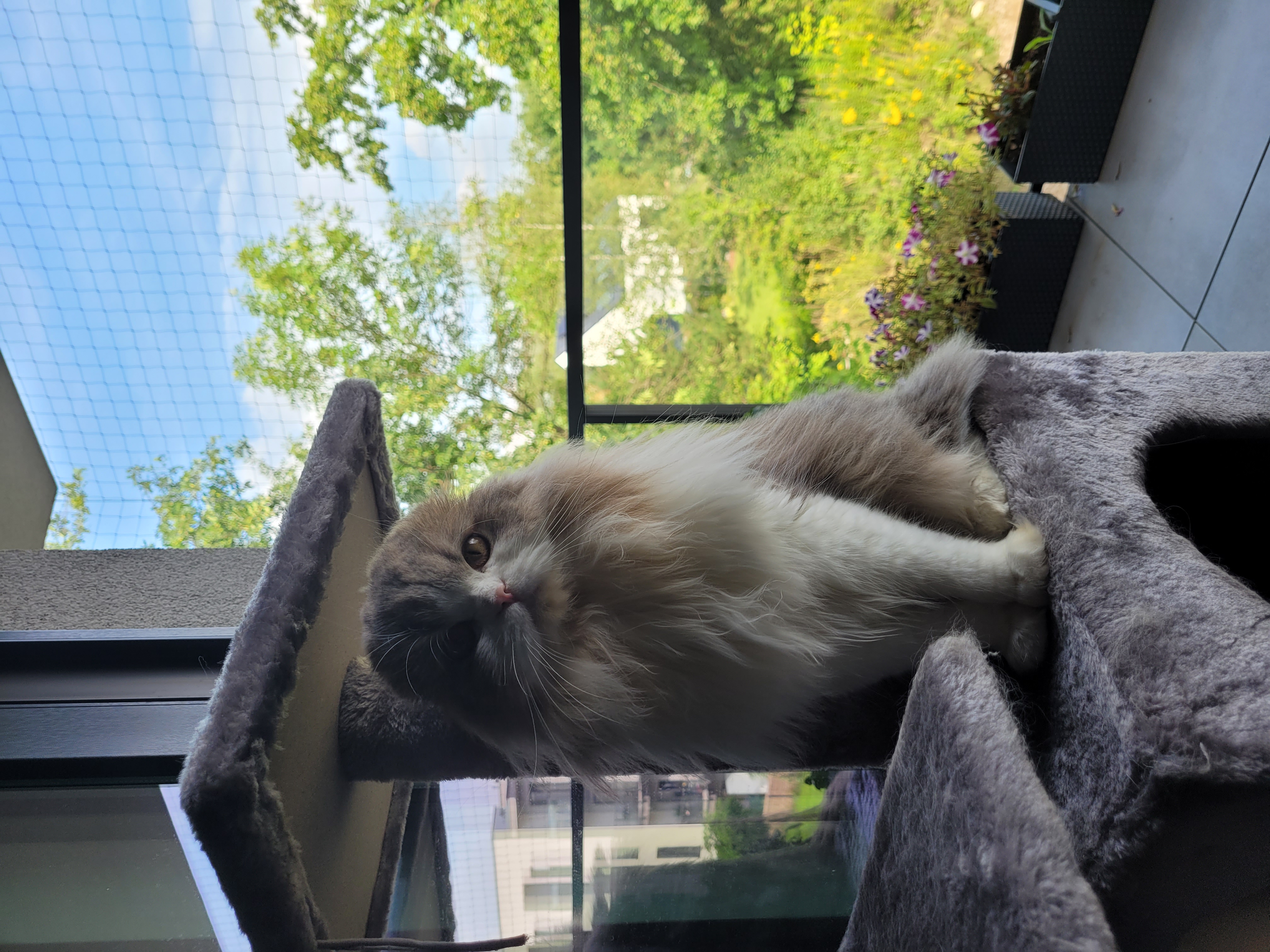
I’m also a personal servant to a beautiful Scottish Fold Longhair male named Monti!
Contact
LinkedIn · k.salacinski93@gmail.com · CV